Story by Richard Pollina
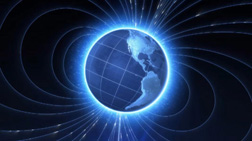
NASA scientists have discovered an electric field encompassing Earth’s atmosphere that is as “fundamental” as gravity — and could even give clues about possible life on other planets.
A team of NASA scientists detected the ambipolar electric field for the first time with a suborbital rocket 150 miles above Earth’s atmosphere, the space agency said.
The ambipolar electric field is a “weak, planet-wide electric field as fundamental as Earth’s gravity and magnetic fields” that lifts the sky and is responsible for the polar winds, NASA said
Although there have been theories about its existence for 60 years, the mission was the first time it was confirmed, the agency said in findings published Wednesday in the journal Nature.
It will now help scientists learn more about life on Earth — and possibly beyond.
“Understanding the complex movements and evolution of our planet’s atmosphere provides clues not only to the history of Earth but also gives us insight into the mysteries of other planets and determining which ones might be hospitable to life,” NASA said.
This major scientific breakthrough has confirmed that our planet has three electric fields surrounding it: gravity, the magnetic field — which protects Earth from cosmic radiation — and the ambipolar electric field.
The electric field was first theorized by scientists over 60 years ago when spacecraft flying over Earth’s poles began to detect “a stream of particles flowing from our atmosphere into space,” according to NASA.
“Something had to be drawing these particles out of the atmosphere,” said Glyn Collinson, a principal investigator at NASA’s Goddard Space Flight Center.
However, with the limitations of technology, scientists couldn’t confirm the theory.
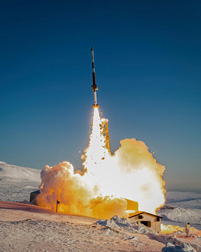
In 2016, Collinson and his team invented a new instrument they thought could measure Earth’s ambipolar field — a suborbital rocket they dubbed Endurance — after decades of scientists puzzled by the mystery.
“There must be some invisible force lurking there responsible for this outflow, but we’ve never been able to measure it because we didn’t have the technology,” Collinson explained.
They launched the rocket into the ambipolar electric field at Ny-Alesund in Svalbard, Norway, just a few hundred miles from the North Pole.
“Svalbard is the only rocket range in the world where you can fly through the polar wind and make the measurements we needed,” said Suzie Imber, a space physicist at the University of Leicester and co-author of the paper.

Endurance — named after the ship that carried Ernest Shackleton on his voyage to Antarctica in 1914 — was launched and reached an altitude of 477.23 miles on May 11, 2022.
The field has been challenging to detect because it is fragile, only producing 0.55 volts.
“A half a volt is almost nothing — it’s only about as strong as a watch battery,” Collinson said. “But that’s just the right amount to explain the polar wind.”
However, this voltage was “just the right amount to explain the polar wind,” Collinson said.
“Despite being weak, it’s incredibly important, it counters gravity, and it lifts the skies up,” Collinson explained.

The team’s discovery revealed that hydrogen ions, the predominant particles in the polar wind, are subjected to an outward force from this field that is an astounding 10.6 times stronger than gravity.
“That’s more than enough to counter gravity, in fact, it’s enough to launch them upwards into space at supersonic speeds,” said Alex Glocer, the Endurance project scientist at NASA Goddard and another co-author of the paper.
Collinson explained that the ambipolar electric field is “this conveyor belt, lifting the atmosphere up into space,” which, along with gravity and the magnetic field, may have helped shape the evolution of our atmosphere.
This groundbreaking achievement has shed new light on the ionosphere’s role in maintaining atmospheric density at varying altitudes.
“This field is so fundamental to understanding the way the planet works. It’s been here since the beginning, alongside gravity and magnetism. It’s been wafting particles to space and stretching up the sky since the beginning,” the lead researcher shared.
Collinson and his team believe that any planet with an atmosphere will likely have an ambipolar field.
“Any planet with an atmosphere should have an ambipolar field,” Collinson explained. “Now that we’ve finally measured it, we can begin learning how it’s shaped our planet as well as others over time.”
(Source : New York Post)
 thân tri
Thảo luận
Không có bình luận