Một chiếc tàu lặn chở những vị khách du lịch giàu có đến thăm địa điểm xác tàu Titanic ở vùng nước sâu ngoài khơi bờ biển Canada đã mất tích đến ngày thứ ba vào hôm thứ Ba (20/6), trong lúc các tàu và máy bay của Hoa Kỳ và Canada đang rà soát một khu vực rộng lớn trong nỗ lực tìm kiếm con tàu.
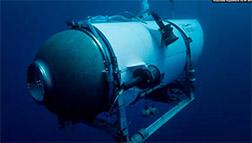
Có 1 thuỷ thủ và 4 hành khách trên chiếc tàu lặn bắt đầu mất tích hôm 18/6, Lực lượng Tuần duyên Hoa Kỳ cho biết, đồng thời nói thêm rằng con tàu có thể lặn dưới nước được tới 96 giờ, mặc dù không rõ liệu nó có nổi lên trở lại hay không nhưng hiện không thể liên lạc.
Trong số những người có mặt trên chiếc tàu lặn có tên Titan, với chi phí trả cho chuyến thám hiểm du lịch là 250.000 USD/người, có tỷ phú người Anh Hamish Harding và doanh nhân người Pakistan Shahzada Dawood cùng con trai Suleman.
Nhà thám hiểm người Pháp 77 tuổi Paul-Henri Nargeolet và ông Stockton Rush, người sáng lập và Giám đốc điều hành của công ty điều hành OceanGate có trụ sở tại Hoa Kỳ, cũng được cho là có mặt trên tàu.
“Chúng tôi rất biết ơn vì sự quan tâm của các đồng nghiệp và bạn bè của chúng tôi và muốn mời mọi người cầu nguyện cho sự an toàn của họ”, gia đình của ông Dawood nói hôm 20/6.
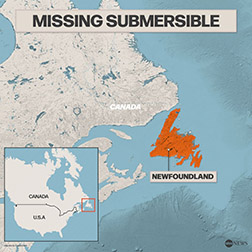
Hôm 19/6, tàu biển, máy bay của Hoa Kỳ và Canada bắt đầu tìm kiếm trong khu vực cách Cape Cod khoảng 1.450 km về phía đông, một số thả phao sonar có thể theo dõi ở độ sâu 3.962 mét, Chuẩn Đô đốc Tuần duyên Hoa Kỳ John Mauger cho hay.
“Chúng tôi đang triển khai tất cả các phương tiện sẵn có để đảm bảo rằng chúng tôi có thể xác định vị trí của chiếc tàu và giải cứu những người trên tàu”, ông nói với các phóng viên hôm 19/6. “Đó là một khu vực biệt lập và rất khó tiến hành tìm kiếm ở khu vực biệt lập đó”.
Ông cho biết các quan chức đã yêu cầu các tàu thương mại giúp đỡ.
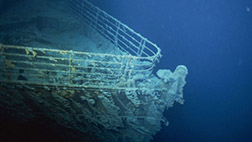
Con tàu Titanic bị chìm vào năm 1912 sau khi va phải một tảng băng trôi, xác tàu nằm ở độ sâu khoảng 3.810 mét. Tàu lặn Titan thường phải mất hai giờ để xuống đến vị trí xác tàu Titanic.
OceanGate Expeditions, công ty tư nhân vận hành tàu lặn, cho biết họ đang “huy động mọi phương án” để giải cứu những người trên tàu Titan.
Lực lượng Tuần duyên Hoa Kỳ cho biết trên Twitter rằng một chiếc thuyền trên mặt nước – Polar Prince – đã mất liên lạc với chiếc tàu lặn khoảng 1 giờ 45 phút sau khi nó bắt đầu lặn xuống địa điểm xác tàu Titanic hôm 18/6.
Titanic, con tàu chở khách của Anh đã bị chìm trong chuyến đi đầu tiên, làm hơn 1.500 người thiệt mạng, một thảm kịch đã trở nên bất tử trong sách và phim, bao gồm cả bộ phim bom tấn “Titanic” năm 1997.
(Nguồn : voatiengviet.com)
5 people in a 20-foot sealed tube: Inside the missing Titanic submersible
By Peter Charalambous and Sam Sweeney
A submersible on a tour of the wreckage of the Titanic was reported overdue by OceanGate Inc. on Sunday, prompting a Coast Guard search effort for the 22-foot, 23,000-pound vessel.
Designed with life support to sustain five crew members for 96 hours, the submersible would need to be rescued in three days to save its five passengers, according to the Coast Guard.
Stockton Rush founded Washington-based OceanGate Inc. in 2009 to make deep-ocean exploration more accessible to scientists and tourists.
Fourteen years, more than 200 dives and three submersible designs later, the company now finds itself in a desperate search to recover the submersible carrying five people aboard that’s gone missing off the coast of Newfoundland, Canada.
OceanGate confirmed Monday it lost contact with a submersible, saying in a statement: “We are exploring and mobilizing all options to bring the crew back safely. Our entire focus is on the crewmembers in the submersible and their families. We are working toward the safe return of the crewmembers.”
Here’s what we know about the submersible:
How is the submersible constructed?
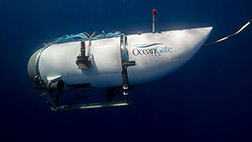
OceanGate has operated three submersibles since its inception, with the first two vessels — the Antipodes and Cyclops 1 — able to reach 1,000 feet and 1,640 feet, respectively.
OceanGate’s only submersible able to reach the Titanic’s wreckage is called the Titan, a carbon-fiber and titanium vessel that can reach 13,123 feet, the company says on its website. (The Titanic rests 12,400 feet under the surface).
The vessel is primarily constructed of lightweight carbon fiber, which is spun into a rigid tube for the vessel’s body, specification sheets show. Two titanium caps are secured to the carbon-fiber body, with one cap including a thick transparent porthole.
Nine feet wide and only 8 feet tall, the Titan leaves little room for its passengers, who sit on a subfloor inside the carbon-fiber tube. A photo in the Titan’s specification sheet shows five passengers seated on the vessel’s floor with limited room to move or stand.
“It’s not a ride at Disney, you know,” OceanGate Expeditions software security expert Aaron Newman said in a promotional video for the expedition. “There’s a lot of real risk involved, and there’s a lot of challenges.”
According to the same specification sheet, the vessel carries four electric thrusters that move it through the water at roughly 3 mph. The company also boasts that the Titan has an “integrated real-time health monitoring system” that actively accesses the vessel’s structural integrity throughout the expedition.
In marketing materials for the 2023 Titanic expedition, the company said it partnered with the National Aeronautics and Space Administration, the University of Washington and Boeing to design the hull of Titan.
According to the company, Rush manned Titan’s first “validation dive” to demonstrate that the vessel could reach a depth of 4,000 meters on Dec. 10, 2018. Rush completed the dive in 7 hours, taking multiple pauses to assess the vessel’s integrity, the company said.
Months after the vessel’s validation, OceanGate began recruiting “citizen explorers” for a six-week expedition to the Titanic in 2019. The company initially charged a $105,219 “mission support fee” for each traveler, according to a press release. The 2023 expedition cost travelers roughly $250,000.
How does the Titan work?
OceanGate was able to reduce the cost of its vessel by using generic components and novel launch methods for the craft, according to the company.
“The use of off-the-shelf components helped to streamline the construction, and makes it simple to operate and replace parts in the field,” the company notes on its website.
The Titan was also designed with a patented launch and recovery platform, according to the company. Pushed into the water from the back of a boat, the Titan would rest atop a recovery platform until it reaches roughly 30 feet below the surface, where ocean currents are generally less intense.
From there, the submersible separates from the platform to navigate to the ocean floor.
“Communication is really key, knowing that they never lost communication,” a former passenger, Kelly Parsons, said about the safety of the vessel in an OceanGate video.
What are the rescue options?
Retired Navy submarine commander David Marquet told ABC News the viability of the Titan’s rescue depends on the location of the submersible.
If the submersible is floating on the ocean’s surface after a malfunction, rescuers would need to locate the craft within three days to unbolt its titanium hatch to provide the passengers with fresh oxygen.
“We know we lost communication,” Marquet said. “It’s probably not just malfunctioning because then they would have just come back up to the surface and they would have started communicating from the surface, so I fear something worse happened.”
The search effort would be more time-consuming and complicated if the craft is still submerged under the water, according to Marquet. Rescuers would have to locate the submersible itself and find a way to extricate it from the ocean — both immensely challenging tasks, he said.
Most submarines, including military attack submarines and the vessels that rescue submariners during emergencies, cannot reach the depths that Titan can reach, complicating the search, Marquet added.
(Sources : abcnews.go.com)
BÀI LIÊN QUAN : Tại sao Titanic chìm từ 1912 đến nay vẫn không được trục vớt ?
 thân tri
Thảo luận
Không có bình luận